
If risk is forming anywhere in your portfolio, HeyNeighbor detects it first.
The signals that lead to claims are already present. They're just not being connected.
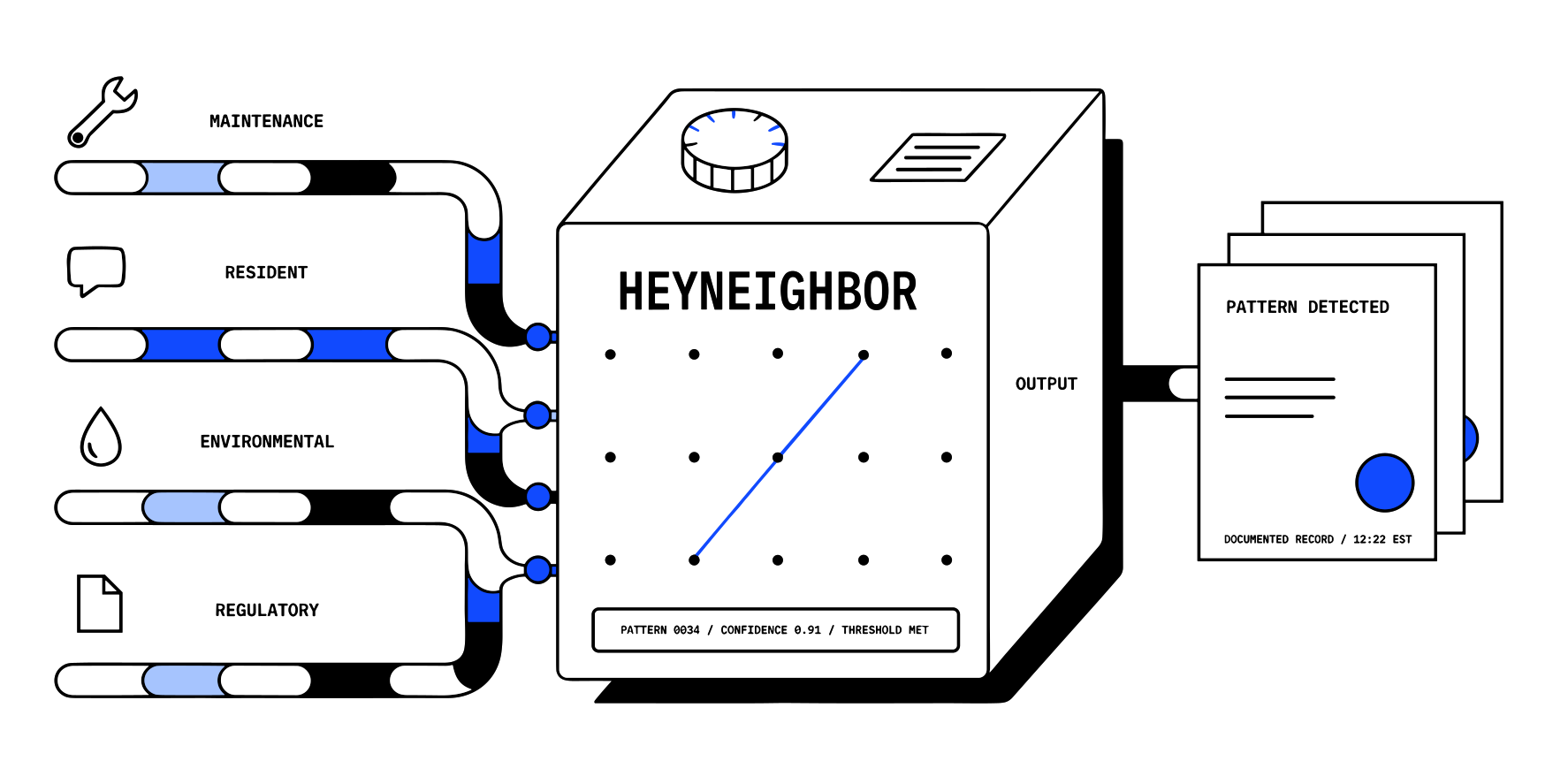
How risk actually builds
Most systems track tickets. That's not where risk shows up.
Risk does not show up once. It repeats, spreads, and gets ignored until it becomes a lawsuit, safety incident, retention problem, or claim. HeyNeighbor detects the signals that appear before those outcomes.
This is how risk gets proven after the fact:
- Repeated issues across units and time
- Evidence of prior awareness
- Signals that establish foreseeability
By the time a report exists, the outcome is already decided.
The real question is: what was visible before it happened?
Early signals
Repetition begins
Pattern formed
Most catastrophic property losses start small
Big problems usually start as small ones that keep happening. If no one connects the dots, leadership finds out too late.
Issues come in from everywhere
Signals appear across maintenance, inspections, complaints, and operations.
Repeat problems look like one-offs
The same issue shows up again and again, but no one sees the pattern.
Most tools close tickets, not risk
Tickets get closed. Risk keeps forming.
Waiting is expensive
Claims, lawsuits, and reputational damage rarely start as major incidents.
Risk forms quietly before anyone calls it a problem
Small issues appear across complaints, inspections, and maintenance. Individually, they seem manageable.
But they don't stay isolated.
They repeat. They show up in different systems. They start to connect.
That's when they become risk.
HeyNeighbor detects these patterns while they're forming — before they turn into incidents, claims, or lawsuits.
- Signals don’t disappear — they accumulate
- Repeat issues get connected across systems
- Leadership is alerted before risk becomes visible
Roof drain clog — Bldg A
Maintenance · Feb 12
Inspection notice filed
Inspection · Feb 19
Resident drainage complaint
Complaint · Feb 22
Pattern Detected
Recurring Drainage Failure
3 signals · 3 systems · 10-day window
Leadership alerted — before the incident
Cross-system threshold reached · Risk visible early
Beyond simple tracking. Complete oversight.
Most tools just record data. HeyNeighbor's risk intelligence engine synthesizes signals into actionable patterns that prevent issues before they escalate.
Proactive Awareness Catch recurring safety hazards before they turn into failed inspections or claims.
Ironclad Documentation A permanent record that proves you took action, long before hindsight sets in.
How HeyNeighbor Works
Capture the signals
HeyNeighbor captures signals wherever property issues first surface.
Explore this featureDetect the pattern
HeyNeighbor connects signals across systems to reveal risk patterns forming.
Explore this featurePattern Detected
Recurring Water Intrusion
4 signals · 3 systems · Crescent Pointe
Alert leadership early
When patterns cross into leadership-level risk, leaders get a clear alert.
Explore this featureRisk Pattern
Recurring Water Intrusion
Crescent Pointe · 4 signals · 8 days
Severity
High
Exposure
Habitability
Cross-system threshold reached · Leadership review required
Closing tickets is not the same as preventing risk
Most systems help teams move work along. HeyNeighbor helps leadership see patterns forming across properties before small issues turn into claims, lawsuits, or reputation damage.
Traditional ticketing
- ✕ Built to close tickets fast
- ✕ History gets buried over time
- ✕ Repeat problems look unrelated
- ✕ Escalation depends on someone speaking up
- ✕ Leadership hears about it when it is already a crisis
HeyNeighbor
- Detects risk patterns across repeat signals
- Preserves reports as permanent institutional memory
- Connects issues that appear unrelated elsewhere
- Escalates leadership-level risk automatically
- Documents what leadership knew and when — and for how long they knew before action was taken
- Creates a timestamped institutional record defensible in litigation and at insurance renewal
Risk never appears without warning.
HeyNeighbor shows leadership when risk is forming before the incident.